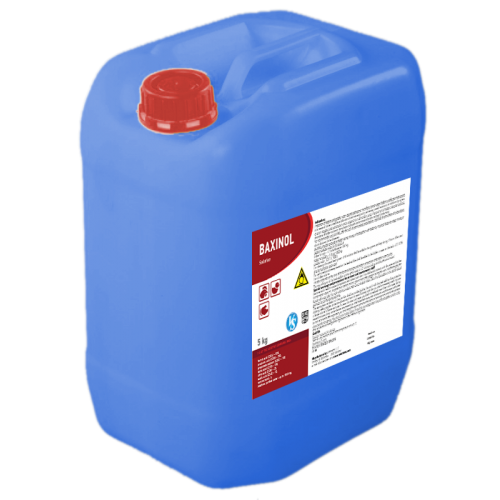
| Ingredients: | formic acid (E236), propionic acid (E280), calcium propionate (E282), lactic acid (E270), citric acid (E330), acetic acid (E260), succinic acid (2b08024), purified water |
| Application: | Oral |
| Type of formulation: | acidifier (feed additive) |
Composition
1 g of the
feed mixture contains active ingredients (mg):
- formic acid
(E236) -
570;
- propionic
acid (E280) -
150;
- calcium
propionate (E282) -
100;
- lactic acid
(E270) -
100;
- citric acid
(E330) -
25;
- acetic acid
(E260) -
10;
- succinic
acid (2b08024) - 5.
Excipient:
purified water - up to 1000 mg.
Form of release
Solution.
Pharmacological properties
BACCINOL
feed mixture is a balanced combination of synergistic organic acids that has
the combined properties of an acidifier and a preservative in feed and drinking
water. BACCINOL helps to stabilise the microflora of the digestive tract of
animals and poultry, inhibits the growth and development of bacteria of the
genus E. coli, Salmonella, Campilobacter, Pseudomonas, etc., and yeast fungi in
feed, water and in the digestive tract of animals and poultry. Preserves nutritional
properties and extends the shelf life of feed. Lowering the pH promotes the
absorption of proteins and activation of enzymes, improves digestion. Creates
favourable conditions for the growth of beneficial microflora. It lowers the pH
of drinking water, cleans the water supply system from biofilm and prevents its
appearance.
BACCINOL
reduces the degree of contamination of water with pathogenic microorganisms
(formic and acetic acids), inhibits their development in the intestines,
prevents the development of diseases of the digestive tract in poultry and
pigs, and has an antifungal effect (propionic acid and its salt, lactic acid).
By reducing the pH value of the intestinal contents, the feed mixture creates
optimal conditions for the development of propionic and lactic acid bacteria
and inhibits the growth of pathogenic microflora. Undissociated forms of
organic acids are lipophilic, therefore, penetrating the membrane of bacterial
cells, they disrupt their metabolism and DNA replication, causing a bacteriostatic
effect.
Formic acid
lowers the pH level and buffering capacity of the feed, inhibiting the growth
and development of pathogenic bacteria: E.coli, Salmonella, Campilobacter,
Pseudomonas , etc., and improves the absorption of calcium and phosphorus.
Formic acid has the strongest antibacterial effect among carboxylic acids.
Propionic
acid and its salt have a strong antifungal effect. Propionic acid is absorbed
through the digestive tract and transported to the liver, where the propionate
is completely converted to glucose. In combination with formic acid, these
acids have a synergistic effect and are used against some gram-positive
pathogens (Clostridium difficile).
Lactic acid
actively stimulates the secretion of pancreatic enzymes. At the same time, it
creates favourable conditions for the development of Lactobacillus bacteria,
which prevent the growth and development of pathogenic microorganisms in the
small intestine of animals. Lactic acid stimulates the process of intestinal
villi regeneration, which increases the absorption surface of nutrients. Lactic
acid has a preventive effect on the mycotoxin aflatoxin (fungus: Aspergilus
flavus, A parasiticus), improves the taste of the feed.
Citric acid
is an effective anti-stress component, stimulates the formation of chelated
forms of calcium, potassium, iron, zinc and other trace elements in the
intestine, which makes them better absorbed by the body. Citric acid
neutralises radionuclides and pesticides and is a universal antioxidant that
prevents the oxidation of fats and prevents feed spoilage.
Acetic acid
is a catalyst for the breakdown of proteins into amino acids and has a strong
bactericidal effect.
Succinic
acid increases the digestibility of feed, enhances biosynthesis processes, is a
universal anti-stress substance, does not cause xenobiotic effects, improves
cellular respiration and metabolism, including glucose, improves the
functioning of the respiratory system, kidneys, intestines, supports the
endocrine system.
Organic
acids reduce the buffering capacity of alkaline feed components, which
stimulates the use of nitrogen (nitrogen) and macronutrients in feed, enhance
the secretion of stomach, pancreas and intestinal enzymes, nutrient conversion,
stimulate the growth of intestinal villi, which improves parietal digestion and
increases the absorption of nutrients, prevent enteritis, and reduce the
intensity of fermentation processes in the large intestine.
Clinical characteristics
Types
of animals
Pigs,
poultry (laying hens, broilers, chickens, pullets, and replacement stock).
Indications
for use
Protection
of feed and drinking water against pathogenic microflora, preservation,
acidification of feed, which helps to extend its shelf life, acidification of
the digestive tract of animals and poultry, which inhibits the growth of
gram-negative and putrefactive microorganisms in the digestive tract, improves
feed digestion, absorption of feed nutrients, stimulates growth and increases
productivity of poultry and pigs
BACCINOL is
recommended for use after the use of antimicrobial drugs, especially for the
prevention of colibacillosis, clostridiosis and other diseases.
Contraindications
None.
Special precautions for use
Not
detected.
Use during pregnancy, lactation, and nesting
According
to the recommended dosage.
Interaction with other tools and other forms
of interaction
Not
detected.
Doses and routes of administration for animals
of different ages
BACCINOL is
sprayed onto the feed during mixing or fed with the feed by means of stepwise
mixing or added to drinking water at the rate calculated:
- feed for
pigs - 1-2 l/1000 kg;
- poultry
feed - 1-3 l/1000 kg;
- drinking
water - 0.3-1 l/1000 l.
To clean
the water supply system: 0.5% solution is added to the system and kept for 12
hours. After use, rinse with cold water;
To prevent
salmonellosis, the feed mixture is added to feed or water at the rate of
0.1-0.3% of the feed amount.
The dose
depends on the level of bacterial background, feed composition and quality of
drinking water.
The maximum
effectiveness of the feed mixture is achieved when the water pH reaches 4.2-4.6
(it is necessary to control the pH level of the water).
Special warnings for persons and service
personnel
Harmful by
inhalation and skin contact! Avoid contact with skin, eyes and clothing. Do not
inhale vapours! Wear protective clothing, mask, gloves and goggles when
working. Wash hands thoroughly with water after handling the feed mixture.
Highly concentrated mixture. Store the feed mixture in a tightly closed
container, open carefully.
Provide
adequate ventilation when working with the feed mixture. Use protective
clothing, goggles, protective gloves, and a mask. In case of skin contact,
rinse immediately with plenty of water and soap. In case of contact with eyes,
rinse with water for several minutes, and if contact lenses are worn, remove
them and continue rinsing the eyes with water. In the event of an accident
after inhalation, take the victim to fresh air and leave in a position
comfortable for breathing. Seek medical attention if you feel unwell. Dispose
of unused feed mixture and its residues in accordance with the requirements of
the current legislation.
Pharmaceutical characteristics
Shelf life
- 24 months.
Shelf life
after the first opening of the primary container, subject to storage conditions
and subsequent hermetic closure of the package with the feed mixture - 3
months.
Special storage measures
Store in a
dry, dark place at temperatures between 5 and 25 °C.
Nature and composition of the primary
packaging container
Neutral
glass vials of NS-1, NS-2, USP-1, closed with rubber stoppers under aluminium
caps, 50 and 100 g each.
Polymer
containers (canisters) of 1, 5, 10, 20 and 25 kg or in bulk.
Special precautions for handling unused
medicinal products or their residues
Unused
residues of feed mixtures or mixtures that have expired are disposed of by
burning them in a special furnace.
Name and location of the registration
certificate holder
Vetsintez
Limited Liability Company
30 Smolna
St., Kharkiv, 61001, Ukraine
Name and location of the manufacturer(s)
Vetsintez
Limited Liability Company
30 Smolna St., Kharkiv, 61001, Ukraine