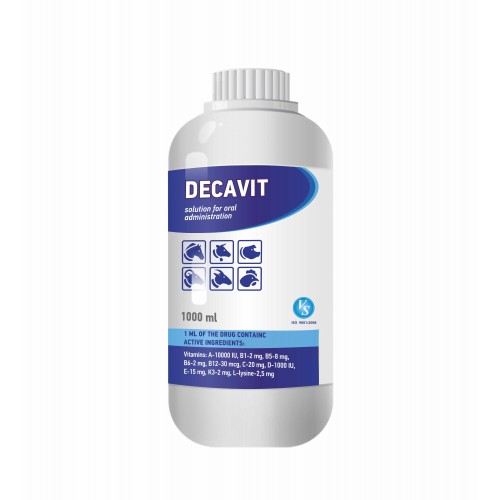
| Ingredients: | L-Lysine, vitamin D3 (cholecalciferol), vitamin A (retinol acetate and palmitate), vitamin B1 (thiamine hydrochloride), vitamin B12 (cyanocobalamin), vitamin B6 (pyridoxine hydrochloride), vitamin E (tocopherol acetate), vitamin K3 (menadione ), vitamin C (ascorbic acid), calcium pantothenate |
| Application: | oral |
| Type of formulation: | Vitamins |
Description
Liquid from light pink to dark pink color and odor components may cause slight sediment and opalescence.
Composition
1 ml of the product contains the active ingredients:
- Vitamin A (retinol acetate) - 10 000 MO;
- Vitamin D3 (cholecalciferol) - 1000 MO;
- Vitamin E (α-tocopherol acetate) - 15.0 mg;
- Vitamin K3 (menadione) - 2.0 mg;
- Vitamin B1 (thiamine hydrochloride) - 2.0 mg;
- Calcium pantothenate - 8.0 mg;
- Vitamin B6 (pyridoxine hydrochloride) - 2.0 mg;
- Vitamin B12 (cyanocobalamin) - 30.0 mkg;
- Vitamin C (ascorbic acid) - 20 mg;
- L-lysine - 2.5 mg.
Other ingredients: polysorbate 80, purified water.
Pharmacological properties
ATC-vet classification code: QA11A multivitamin combinations.
DECAVIT - combined multivitamin preparations, the effect of which is due to its composition.
Vitamin A is - supports structure of the epithelium of the mucous membranes, eyes, and increases the resistance of the body's resistance to infectious diseases, stimulates the growth of the reproductive function of females and males, prevents bone resorption and fetal defects in its development.
Vitamin D3 - promoting the absorption of calcium and phosphorus in the intestine and reabsorption of urine from the primary, the synthesis of calcitonin, proteins, organic bone matrix and its mineralization maintains homeostasis of calcium and phosphorus, and affects the formation of functional maturity of the fetus.
Vitamin E - a natural antioxidant that prevents the formation of peroxide compounds, protects cell membranes from destruction products of lipid peroxidation, activates antioxidant enzymes, the synthesis of myo and hemoglobin, prevents infertility, positive effect on the development of the fetus, profilaktiruet Duchenne, bilomyazovu disease in chickens, ducklings and turkeys - encephalomalacia and pericardial dіatez.
Vitamin K3, influencing the synthesis of prothrombin and proconvertin thromboplastin plays an important role in blood clotting, prevents the development of hemorrhagic diathesis.
Vitamin B1 - is a part of enzymes - carboxylase transkatalazy, pyruvate decarboxylase involved in the functioning of the Krebs cycle, carbohydrate and protein metabolism, prevents the development of cortico-cerebral necrosis.
Calcium pantothenate is required for the synthesis of coenzyme A (CoA), which plays a key role in carbohydrate and fat metabolism, functioning of the Krebs cycle, synthesis of citric acid, acetyl-choline, steroid hormones, bile acids, fatty acid oxidation, metabolism short-chain fatty acids into the proventriculus ruminants .
Vitamin B6 - Entrance as the prosthetic group of enzymes, which takes place under the influence of the synthesis of amino acids, fat, is involved in the synthesis of epinephrine and norepinephrine, serotonin, histamine, and nucleic acids.
Vitamin B12 - uchastvuet in blood, synthesis of methionine and choline, the nucleic acid has a lipotropic effect and stimulates biloksintezuvalnu liver function, activates the synthesis of proteins, retinol.
Vitamin C - stimuliruet iron absorption, and its inclusion in the heme molecule, the maturation of red blood cells, collagen, ensures the integrity of the walls of blood vessels and prevents bleeding, stimulates sinetez corticosteroids in the adrenal glands, thyroid hormones, pancreas and gonads.
L-lysine - an essential amino acid involved in the mineral, Azotovit and carbohydrate metabolism.
Application
Prevention A-, D-, E, K and hypovitaminosis B, rhinitis, conjunctivitis, keratitis, uric acid, and hemorrhagic diathesis, rickets, bone disease, encephalomalacia, muscular dystrophy, cortico-cerebral necrosis, Peroz, anemia in livestock and poultry. DECAVIT increases nonspecific resistance, productivity, reproducible function, stimulates the growth and development of animals, prevents fetal mortality.
Dosage
Orally administered daily with drinking water in a dose of 1 liter of drinking water for 3-8 days
- chickens, turkeys, ducks, quail, parent stock before the start of egg production - of 0.5-1 ml, during the egg-laying - 1-2 ml;
- chickens, broilers, turkeys, ducks, perepelyata to 21 day old rearing - 0.5-1 ml;
- broilers, turkeys, ducks, quail over 3 weeks - 1-1,5 ml;
- decorative bird - 0.5-1 ml;
Orally in drinking water (milk) once a day 5
- calves in the months of age - 10 ml of milk with 3-5- 30 days of age,
- dry cows - 40-50 ml of water for 3-4 weeks before calving,
- lactating cows - 50-60 ml of water, in the first three weeks of lactation,
- gestating sows - 8-10 ml of water in the last month of pregnanсу
- lactating sows - 15 ml of water until weaning,
- ewes and goats kitni - 3-4 ml of water, in the last month kitnosti,
- lactating ewes and goats - 5 ml of water, in the first month of lactation,
- zherebnyh mare - 15 ml of water, in the last month zherebnosti,
- lactating mares - 20-25 ml of water, in the first month of lactation,
- lambs, goats - 1 ml of milk in the first 30 days,
- piglets weighing 6-12 kg, with water once, 2.5-3.0 mL to 5 days before weaning the sow and 3-4 ml 2-3 times a day for 10-15 days after weaning.
- dogs, cats, fur-bearing animals - 0.5-1 ml.
Contraindications
We have no data.
Side effects
We have no data.
Product form
The solution in vials of neutral glass of the brand NS-1, NS-2, PW-1, neutral glass ampoules brand HC-1, HC-2, PW-1 volume of 0.5 mL or 1, enclosed in cardboard boxes.
The solution in vials of neutral glass of the brand NS-1, NS-2, PW-1 are closed with rubber stoppers under an aluminum run of 10 or 100 ml.
Containers of 1 or 5 liter.
Safekeeping
Dry dark, inaccessible for children place at temperatures from 5 ° to 25 ° C.
Shelf life
2 years.
With the initiated drug vial should be used within 7 days.
For use in veterinary medicine!